
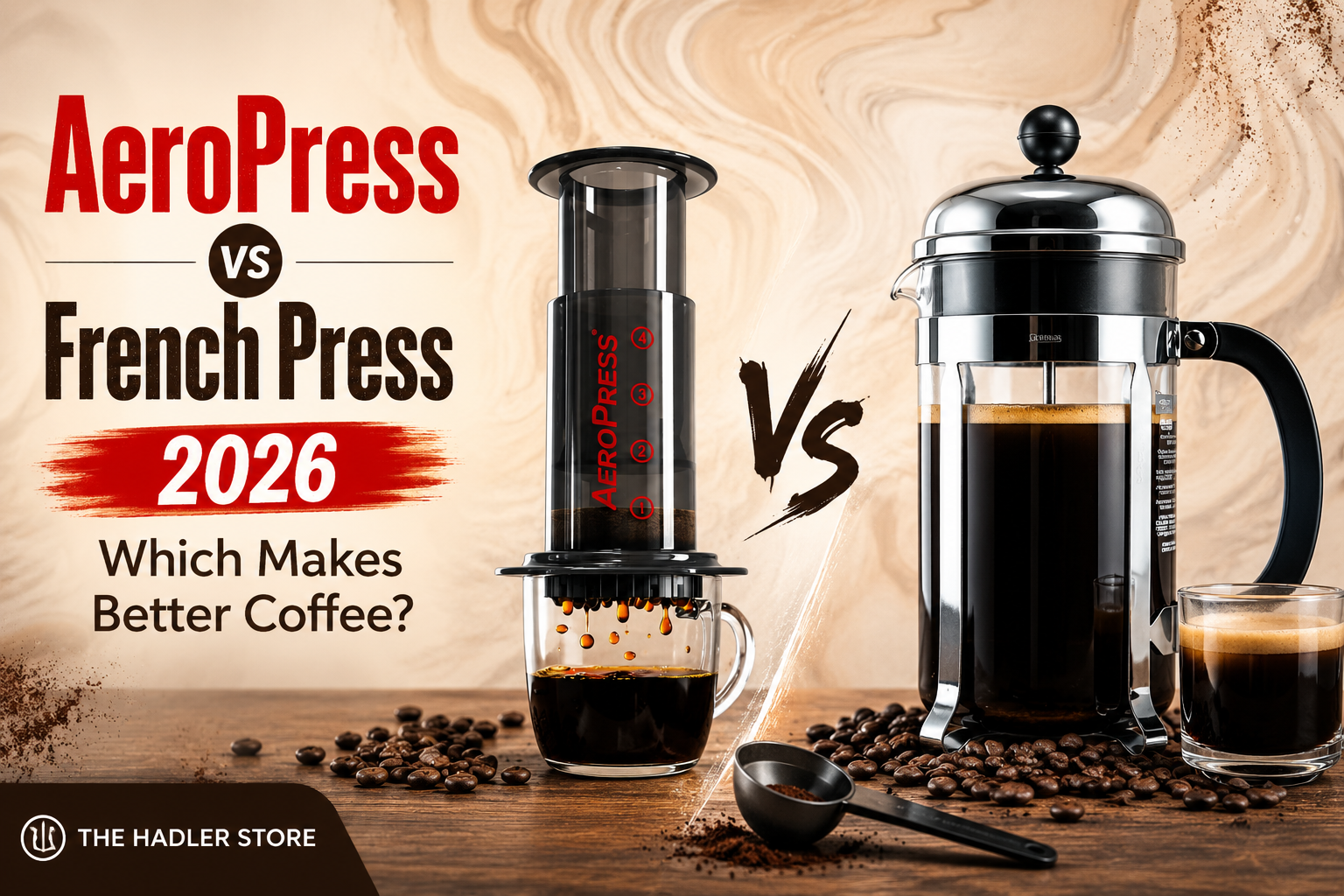
AeroPress vs French Press — Which Makes Better Coffee for Home Brewers?
The AeroPress and the French press are two of the most discussed manual brewers in specialty coffee — both affordable, both capable of excellent results, and both with dedicated advocates who will tell you the other is wrong. But they are built on entirely different principles, and the better one depends almost entirely on who you are and how you drink.
This is an honest side-by-side on taste, ease of use, cleanup, and portability — with a clear verdict for each type of home brewer.
How Each One Actually Works
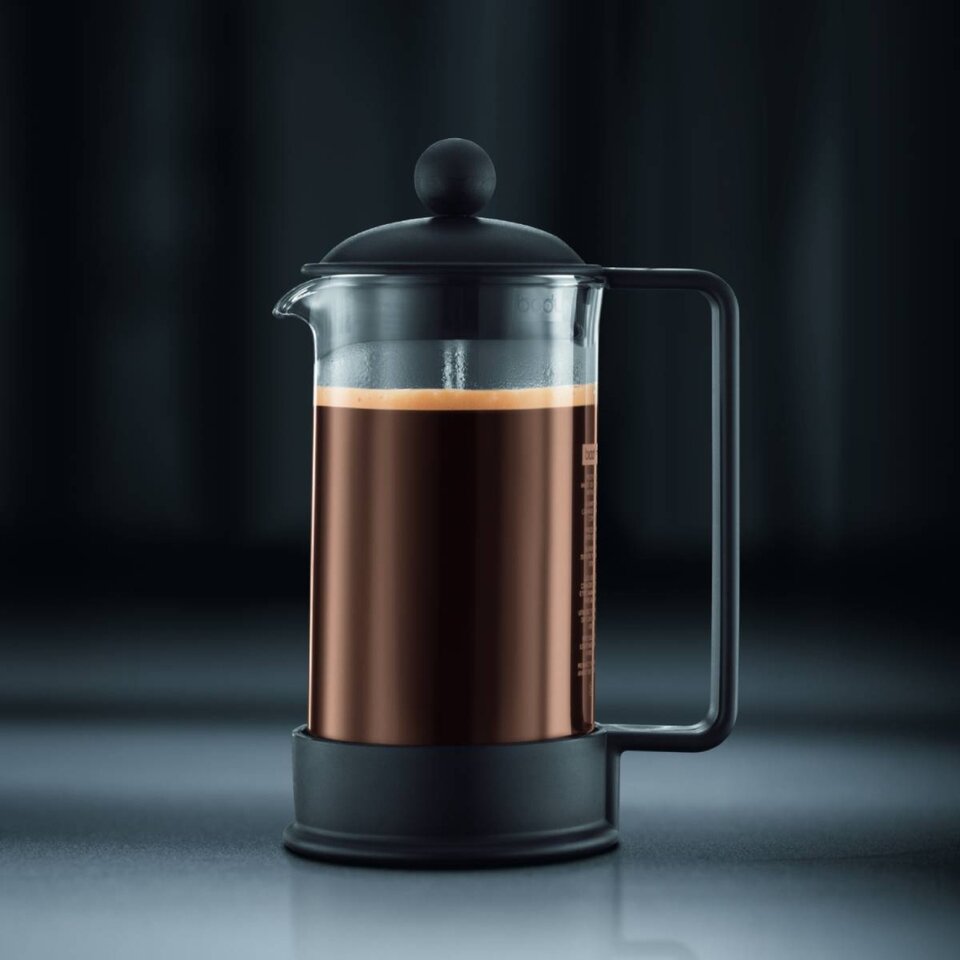
The French press is straightforward. Add coarsely ground coffee, pour in hot water, wait four minutes, and press a metal mesh filter down through the liquid. The grounds stay at the bottom, the coffee stays on top. No paper filter, no electricity, and essentially the same design since the 1920s.
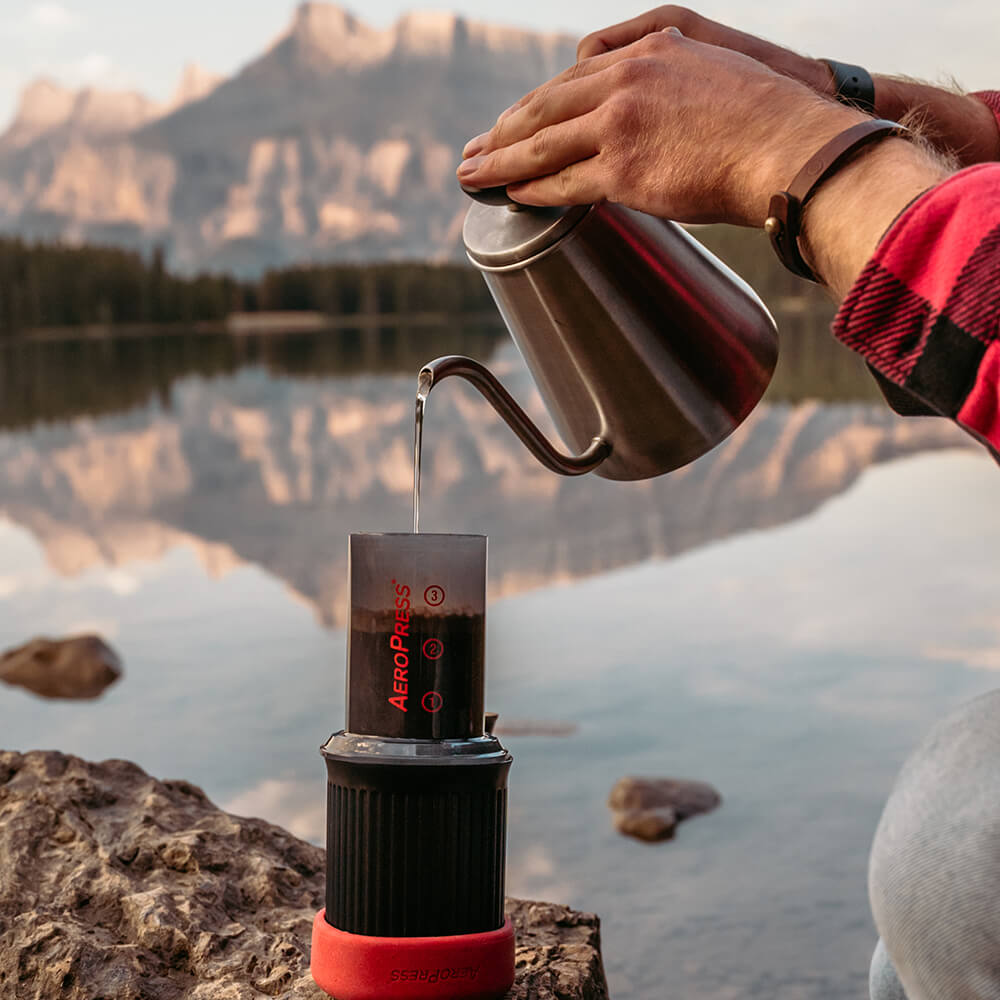
The AeroPress, invented by Alan Adler in 2005, works on a different principle entirely. You brew coffee in a plastic chamber and push the liquid through a small paper or metal filter using a plunger. The process takes 60–90 seconds from start to finish. The mechanism looks simple — and it is — but the number of variables you can control makes it one of the most versatile manual brewers available.
Taste

French press coffee has a distinctive character: rich, full-bodied, with a depth that comes from the metal mesh filter allowing fine particles and natural coffee oils into the cup. The result is a textured, robust brew with noticeable weight. For those who want something bold and direct from the first sip, this is often the brewer that delivers it.
The trade-off is sensitivity to error. Over-steep it, use water that is too hot, or leave the grounds in contact with the liquid after pressing, and bitterness develops quickly. The French press is forgiving in its simplicity but unforgiving in its timing.

The AeroPress produces a cleaner, brighter cup. The paper filter removes most of the natural oils that contribute to bitterness, and the short brew time reduces the window for over-extraction significantly. The result is consistently more forgiving and considerably more versatile — the same brewer can produce an espresso-style concentrate, a smooth long coffee, or something in between, depending on your ratio and grind.
On taste — it is genuinely a draw, but they produce different drinks. French press for those who want something hearty and full-bodied. AeroPress for those who want clarity, flexibility, and easier consistency.
Ease of Use

French press is the simpler brewer to start with. The technique is essentially steeping — grind, pour, wait, press. Getting the coffee-to-water ratio right and the grind size consistent matters, but there is very little active technique required once the basics are understood.
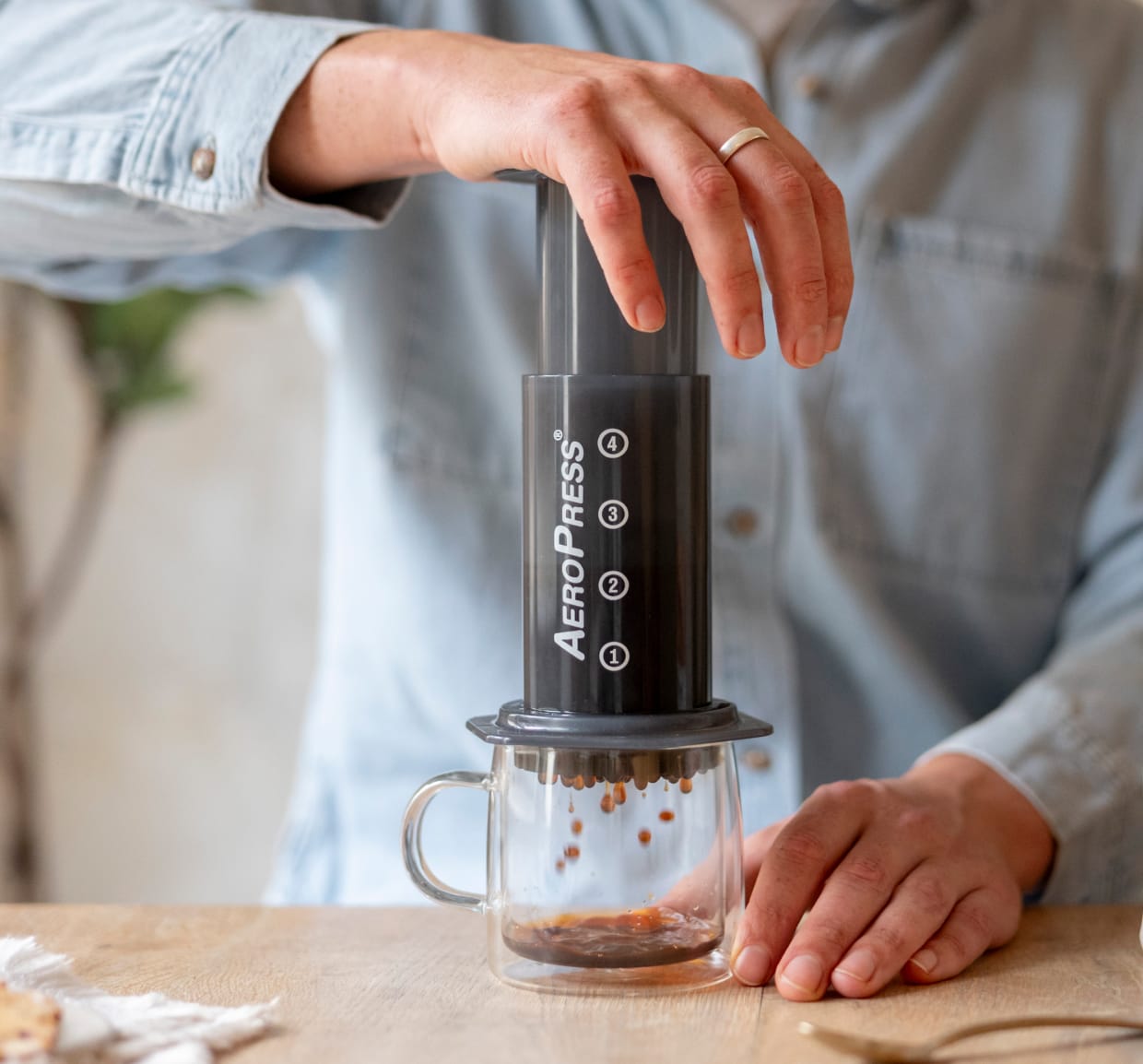
The AeroPress has a slightly higher learning curve. There are dozens of recipes in circulation — different temperatures, steep times, plunger pressures, and an inverted method where the entire brewer is flipped. That flexibility is an asset for those who enjoy refining their process. For those who want coffee before they are fully awake, the range of options can feel like more than they asked for initially.
The AeroPress becomes straightforward quickly once you settle on a recipe. But for sheer simplicity from day one, the French press is the more immediately accessible brewer.
Cleanup
The AeroPress wins this category without contest. Cleanup takes approximately 15 seconds: unscrew the cap over a bin, press the plunger to eject the grounds as a compact puck, rinse the chamber, done. The grounds come out cleanly and the brewer is ready for the next use almost immediately.
French press cleanup is more involved. Wet grounds cling to the plunger assembly and the carafe, the metal mesh stains over time, and decanting the spent grounds without making a mess requires either care or resignation. It is not onerous, but it is noticeably more work — particularly at the start of the morning.
Portability
Both brewers are portable in that neither requires electricity. But the AeroPress was designed with travel in mind in a way the French press was not. It is lightweight, compact, and nearly indestructible. The AeroPress Go model takes this further — the mug doubles as a carrying case and the entire kit fits in a laptop bag without difficulty.
Most French presses are glass — functional in a kitchen, a liability in a bag. Stainless steel options travel better, but they are bulkier and heavier than the AeroPress regardless. For anyone who brews at the office, on the road, or in hotel rooms, the choice here is clear.
Comparison at a Glance
| Category | AeroPress | French Press | Winner |
|---|---|---|---|
| Brew time | 60–90 seconds | 4–5 minutes | AeroPress |
| Taste profile | Clean, bright, versatile | Rich, bold, full-bodied | Depends on preference |
| Ease of use | Moderate — many recipe variables | Very easy from day one | French Press |
| Cleanup | ~15 seconds, minimal mess | More involved, stains over time | AeroPress |
| Portability | Excellent — travel-ready | Bulky, fragile (glass) | AeroPress |
| Espresso-style brewing | Yes — via concentrate method | No | AeroPress |
| Price range | Mid-range | Budget to mid-range | Tie |
| Durability | Very high — BPA-free plastic | Glass can break | AeroPress |
Which Should You Buy
If you want a simpler, more atmospheric brewer — something that sits on a kitchen counter and makes a bold, satisfying cup without much involvement — the French press is the right choice. It is unhurried, the result is distinctive, and the technique asks little of you once the basics are in place.
If you want versatility, speed, easy cleanup, and the ability to make consistently good coffee anywhere — the AeroPress is one of the best-value manual brewers available. It is forgiving, adaptable, and once you settle on a recipe, it becomes the brewer you reach for first.
If you are starting fresh and not yet sure what kind of coffee drinker you are, the AeroPress gives you considerably more room to experiment — and considerably less to manage while you work it out.
By Use Case
Complete beginner: French Press — fewer variables, very hard to fail badly, and the full-bodied result is immediately rewarding.
Frequent traveller: AeroPress Go — compact, indestructible, and produces a proper cup in any setting including hotel rooms.
Espresso lover: AeroPress — a fine grind and short steep produces a strong concentrate that works well as the base for milk drinks.
Office brewer: AeroPress — fast, quiet, and the cleanup is entirely manageable at a desk.
Someone who just wants a simple morning cup: French Press — the technique is minimal and the result is consistent once you have your ratio dialled in.
Frequently Asked Questions
Is the AeroPress better than the French press?
For most home brewers — yes, in terms of versatility, cleanup, and portability. But the French press produces a distinct style of coffee that the AeroPress does not replicate. If you want a rich, oil-forward, full-bodied cup, the French press is the correct tool. If you want flexibility and easier daily use, the AeroPress wins.
Can the AeroPress make espresso?
Not true espresso — a machine producing 9 bars of pressure is required for that. But the AeroPress can produce a concentrated brew using a fine grind and minimal water that works as an espresso substitute in milk drinks like flat whites and lattes. The Fellow Prismo attachment improves this further by creating back-pressure during the press.
What grind size for French press?
Coarse — similar to coarse sea salt. A finer grind passes through the metal mesh filter and produces a gritty, over-extracted cup. A consistent coarse grind from a burr grinder produces the best French press results.
What grind size for AeroPress?
Medium-fine as a starting point — slightly finer than drip coffee, noticeably coarser than espresso. The AeroPress is forgiving of grind variation, which is part of why it suits beginners and experienced brewers alike.
Is the AeroPress Clear worth buying?
Yes — particularly for those learning to brew. The transparent chamber lets you watch extraction in real time, which makes it significantly easier to understand how grind size, steep time, and water temperature affect your result.
What cup works best with the AeroPress?
Any cup that can hold the AeroPress chamber during brewing and fits comfortably in your hand for drinking. The Huskee Cup — made from upcycled coffee husk, available in 8oz, 12oz, and 16oz — is a natural pairing. Its ribbed exterior insulates well and the cup holds heat longer than standard ceramic.
Where can I buy the AeroPress in Singapore?
We carry the full AeroPress range at The Hadler Store — including the AeroPress Go, AeroPress Clear, and Original XL — with worldwide shipping from Singapore.
Shop AeroPress at The Hadler Store
We carry the complete AeroPress range including the AeroPress Go for travel, the AeroPress Clear, and the Original XL for home brewing — alongside reusable metal filters, the Fellow Prismo attachment, and Huskee cups. Authorised retailer, worldwide shipping from Singapore. Free delivery on orders over $280.
Shop the full AeroPress range at The Hadler Store →
Also read: Hario V60 Brew Guide 2026