
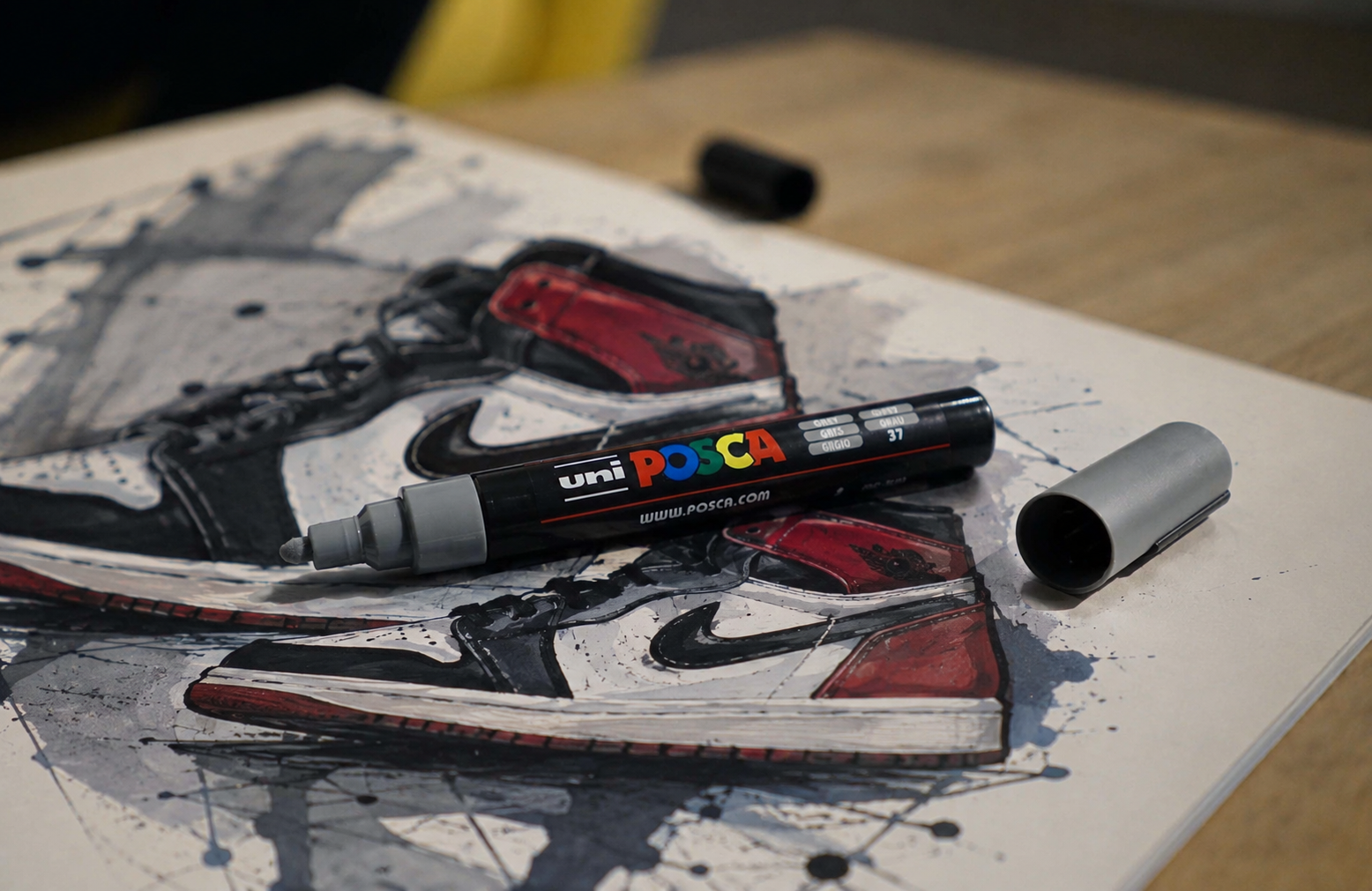
How to Use Posca Markers on Any Surface: The Complete Guide
You buy a set of Posca markers. You try them on paper. They work beautifully. Then you try them on glass — and wonder why the result looks different. Or you paint a design on a mug and it wipes off after washing. Posca markers can do far more than most people realise — but surface matters enormously. This guide tells you exactly what works, why, and how to get results that actually last.
What Makes Uni Posca Markers Different

Posca markers are water-based acrylic paint markers — not ink markers and not oil-based paint pens. That distinction matters. Because the pigment is suspended in water and acrylic, Posca markers are non-toxic and odour-free, making them suitable for use in any room by adults and older children alike. The paint is opaque on most surfaces, covering what is beneath it including dark backgrounds. Colours are layerable and blendable — wet paint can be merged at the edges, and dry layers can be built up for depth and correction.
The range spans 11 tip sizes from 0.7mm ultra-fine to 15mm broad chisel, and 71 colours including metallics, fluorescents, and glitter finishes. That range is why Posca has become the tool of choice for illustrators, street artists, product customisers, sneaker painters, and craft hobbyists worldwide.
Before You Start — Priming Your Markers

If you have ever pressed a Posca tip on paper and gotten nothing — this is why. The markers need priming before first use, and again after long breaks between sessions.
- Shake firmly with the cap on. You will hear a small ball rattling inside — that is the agitator mixing the pigment back into suspension. Shake for 10–15 seconds.
- Press the tip down on scrap paper several times with light, consistent pressure until the paint begins flowing smoothly. Do not force it or press hard — this compresses the tip permanently.
- Test the flow before starting your project. A few strokes on scrap paper confirms the consistency and colour saturation are right before you commit to your surface.
Repeat this process whenever a marker feels dry or inconsistent mid-project. Keeping caps on tightly after each use extends tip life significantly — Posca tips will dry out if left uncapped for extended periods.
How to Use Posca Markers on Different Surfaces
This is where most people go wrong. The same Posca marker behaves differently depending on what you are painting on. Here is a surface-by-surface breakdown of everything you need to know:

Paper and Cardboard
The most forgiving surface. Paint soaks into the fibres and becomes permanent almost immediately. No preparation needed. Blending works best here — work quickly before the paint dries, or use a damp brush to soften edges and extend working time. Ideal for illustration, hand-lettering, card-making, and sketchbook work.
Wood
Unfinished wood absorbs paint quickly, so build colour up in layers rather than trying to achieve full coverage in a single pass. Sealed or painted wood behaves more like a non-porous surface. Once the design is fully dry, protect it with a clear varnish or matte sealant — particularly important for items that will be handled frequently.
Stone and Ceramic
Works beautifully for rock painting, terracotta pots, and decorative ceramics. For terracotta, bake the finished piece in an oven at 220°C for 45 minutes to set the paint. For porcelain or glazed ceramics, bake at 160°C for 45 minutes. Optionally seal with varnish afterwards for additional protection. Important: baked ceramic Posca pieces should be considered decorative, not food-safe.
Glass
Posca adheres well to clean glass, but the paint remains removable until heat-set. Bake glass items at 160°C for 45 minutes for a more durable finish, then apply a clear varnish. For temporary glass decoration — event signage, window art, seasonal displays — skip the baking entirely. The paint wipes off cleanly with a damp cloth when you are done.
Fabric and Textiles
Posca works on fabric but needs heat-setting to survive washing. Once the design is fully dry, iron on the reverse side using a medium-hot iron with no steam for 2–3 minutes. This fuses the acrylic into the fibres and makes it washable. Avoid machine washing on high heat after setting — cold or warm cycles are safer for longevity.
Plastic and Metal
Clean the surface thoroughly with isopropyl alcohol before starting — any grease, fingerprints, or residue will prevent proper adhesion. Posca paint sits on the surface rather than soaking in, so handle the piece carefully while drying and avoid touching the painted area. Seal with varnish for durability on items that will be handled or exposed to moisture.
The key rule across all non-porous surfaces: clean before you start, and seal when you finish. Those two steps are the difference between a result that lasts and one that chips or wipes off within days.
What Tip Size Should You Use
The Posca range spans 10 tip styles. Here is a practical guide to the most useful ones for each type of work:

- PC-1MR (0.7mm, calibrated fine) — Precision linework, technical drawing, fine detail on small objects. Essential for illustrators working at small scale.
- PC-3M (0.9–1.3mm, bullet) — The all-rounder. Good for outlines, lettering, and general use across most surfaces and project types.
- PC-5M (1.8–2.5mm, bullet) — Fills, bolder lettering, soft illustration work. The most popular size in most sets and the best starting point for beginners.
- PC-7M (4.5–5.5mm, bullet) — Background fills, large colour areas, block lettering, and wider strokes.
- PCF-350 (flexible brush tip) — Variable stroke width based on pressure. Excellent for calligraphy, expressive illustration, and anywhere you want a painted, hand-made quality to the line.
- PC-8K or PC-17K (broad chisel) — Large-scale coverage, mural work, furniture refreshing, and bold backgrounds.
For beginners, a set that includes a fine tip (PC-3M), a medium bullet (PC-5M), and a brush tip (PCF-350) covers the widest range of projects with the smallest investment.
Can You Blend Posca Markers
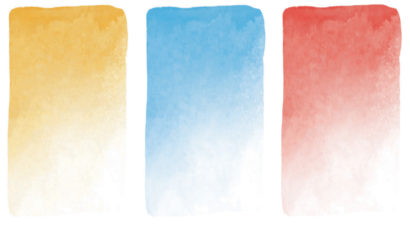
Yes — and this is one of the features that makes Posca genuinely special among paint markers. There are two main blending approaches and both produce excellent results:
Wet-on-wet blending: Apply two colours side by side while both are still wet, then use a damp brush, damp cotton bud, or your fingertip to merge them at the edges. This creates smooth gradients that look nothing like the hard edges most people expect from markers. Work quickly — Posca dries in a few minutes depending on surface and ambient humidity.

Layering (dry-on-dry): Let the first colour dry completely, then apply a second colour over it. Because Posca is opaque, the top layer covers the bottom completely. This lets you build depth, create highlights on dark backgrounds, add detail over flat fills, or correct mistakes without starting over.
You can also dilute Posca paint with a small amount of water for a more wash-like consistency on paper — useful for backgrounds and soft atmospheric effects where you want the paper texture to show through.
Is Posca Paint Permanent
On porous surfaces like paper, uncoated card, wood, and stone — yes, the paint is permanent once dry and requires no additional treatment. On non-porous surfaces like glass, metal, sealed plastic, and glazed ceramic — the paint is durable once dry but not indestructible without sealing or heat-setting as described above.
The paint is water-resistant when dry — but not waterproof without a sealant applied over the top. For anything that will be exposed to water, handling, or outdoor conditions, sealing is not optional.
The key rule: porous surfaces are permanent by default. Non-porous surfaces require sealing or heat-setting for lasting results.
What Projects Are Posca Markers Best For
Almost anything creative. Some of the most popular uses among artists and hobbyists:
- Custom sneaker and bag painting
- Rock painting and pebble art
- Hand-lettered mugs, plant pots, and ceramics
- Sketchbook illustration and mixed-media art
- Decorating skateboard decks, helmets, and sports gear
- Fabric design on tote bags, T-shirts, and jackets
- Furniture upcycling — adding detail or pattern to wood, painted surfaces, or laminate
- Window and glass art, both temporary and permanent
- Journaling, card-making, and scrapbooking accents
What makes Posca uniquely suited to all of these is the combination of opacity, non-toxicity, and genuine multi-surface versatility. You do not need different marker brands for different projects — one quality set covers most of what you will want to make.
Frequently Asked Questions
Do Posca markers work on dark surfaces?
Yes — because the paint is opaque, Posca markers cover dark backgrounds effectively. White, metallics, and fluorescent colours are particularly striking on black or dark-coloured surfaces. Apply a base layer first and let it dry before adding detail on top.
How do you fix Posca markers that have dried out?
Remove the tip carefully using pliers or your fingers, soak it in warm water for 10–15 minutes, then reinsert it. If the barrel itself has dried, add a small amount of water through the tip end and shake. Prevent drying by always replacing caps immediately after use.
Can children use Posca markers?
Posca markers are non-toxic and odour-free, making them suitable for older children under adult supervision. They are not recommended for very young children due to small parts. Always check the packaging for age guidance.
Do you need to seal Posca markers on rocks?
Not strictly necessary for indoor decorative pieces, but recommended for rocks that will be handled frequently or displayed outdoors. A matte or gloss spray varnish applied after the paint dries fully gives a professional finish and significantly extends longevity.
What is the difference between Posca and acrylic paint?
The pigment and binder are similar, but delivery and control are very different. Acrylic paint requires a brush, mixing, and more preparation. Posca delivers paint directly from a self-contained marker with consistent flow and tip control — making it faster, cleaner, and more portable for most craft and illustration applications.
Shop Uni Posca at The Hadler Store
We carry the Uni Posca range including individual markers and sets across multiple tip sizes. Worldwide shipping from Singapore. Free delivery on orders over $280.