
Prismacolor Premier Colored Pencils Review 2026 — Are They Really Worth It?
Prismacolor Premier has been the benchmark for soft-core coloured pencils for decades. In 2026 it still holds that position for most adult artists — named by Wirecutter as the best overall coloured pencil for adults, and consistently the most-reached-for set in art supply stores globally.
But the question of whether they are worth it depends entirely on what you are trying to do with them. This review covers everything: the soft core formula, blending performance, lightfastness, value across set sizes, and who should — and should not — buy them.

What Makes Prismacolor Premier Different
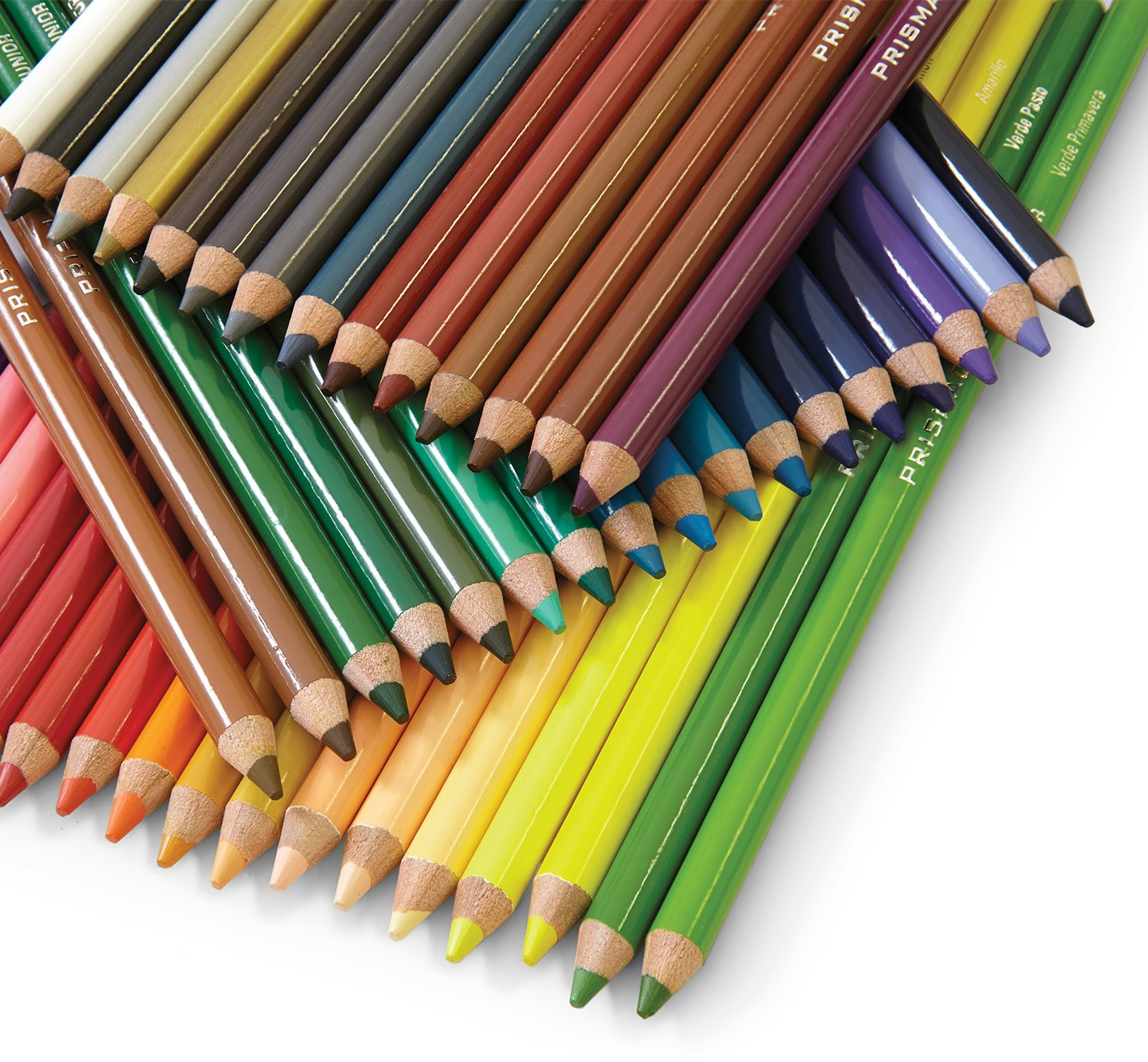
Most coloured pencils use a wax or oil-based core. Prismacolor Premier uses a thick, soft wax-based core with a higher pigment load than most competitors at the same price point. This combination produces two things that define the Premier experience: exceptional colour vibrancy straight out of the pencil, and a blendability that is genuinely difficult to match without moving up to professional-grade pencils costing two or three times as much.
The core diameter is also notably thicker than student-grade pencils — 3.8mm — which means more coverage per stroke and a softer, more fluid feel on paper. For artists who want rich, saturated colour without fighting the pencil, this matters significantly.
The range spans 150 colours in the full set, covering a colour spectrum that includes a strong selection of skin tones, botanical greens, and neutrals that illustrators and portrait artists rely on most.
Blending Performance — Where Prismacolor Earns Its Reputation
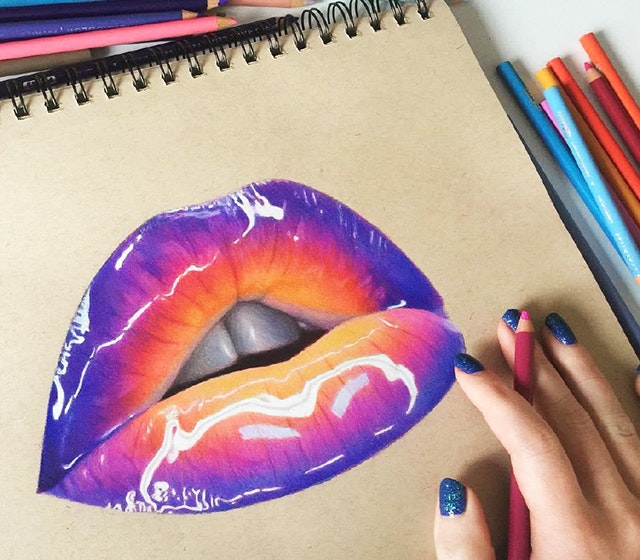
Blending is where the Premier genuinely earns its reputation. The soft wax core allows colours to layer and mix on the paper surface in a way that harder pencils — including Faber-Castell Polychromos — simply cannot replicate without significantly more effort.
Layering teal over coral produces a smooth transition with minimal visible pencil texture. Building up multiple layers to achieve depth in shadows or botanical gradients is intuitive rather than laborious. For artists who work with blending stumps, colourless blenders, or solvents like Gamsol, the Premier core responds exceptionally well — solvents in particular dissolve the wax binder to produce an almost paint-like finish that looks nothing like a coloured pencil drawing.
The trade-off for this softness is tip durability. Premier pencils break more easily than oil-based alternatives and require more frequent sharpening during detailed work. A quality sharpener — ideally a two-hole barrel sharpener like the Staedtler 512 — makes a noticeable difference in how the pencil holds its point.
Blending Compared to the Main Alternatives
| Prismacolor Premier | Faber-Castell Polychromos | Derwent Lightfast | |
|---|---|---|---|
| Core type | Soft wax | Hard oil | Oil-based |
| Blendability | Excellent | Good | Very good |
| Tip durability | Low | High | High |
| Colour vibrancy | Very high | High | High |
| Lightfastness | Mixed | Excellent | Excellent |
| Price per pencil | Mid | Mid-high | High |
Lightfastness — The One Honest Caveat

Lightfastness is the measure of how resistant a pigment is to fading when exposed to light over time. This is where Prismacolor Premier receives its most consistent criticism from professional artists — and it is a fair one.
A portion of the Premier range has poor lightfastness ratings, meaning colours will fade noticeably when displayed under natural or artificial light over months and years. The affected colours are primarily in the warmer spectrum — certain reds, magentas, and purples.
For artists who create work for sale, commission, or long-term display, this matters. For artists who draw for personal practice, sketchbooks, journaling, or digital scanning, it matters very little — scanned artwork does not fade.
Prismacolor publishes lightfastness ratings on their website for the full range. If archival permanence is a priority, cross-reference the colours you use most against that list and substitute where needed.
Which Set Size Should You Buy
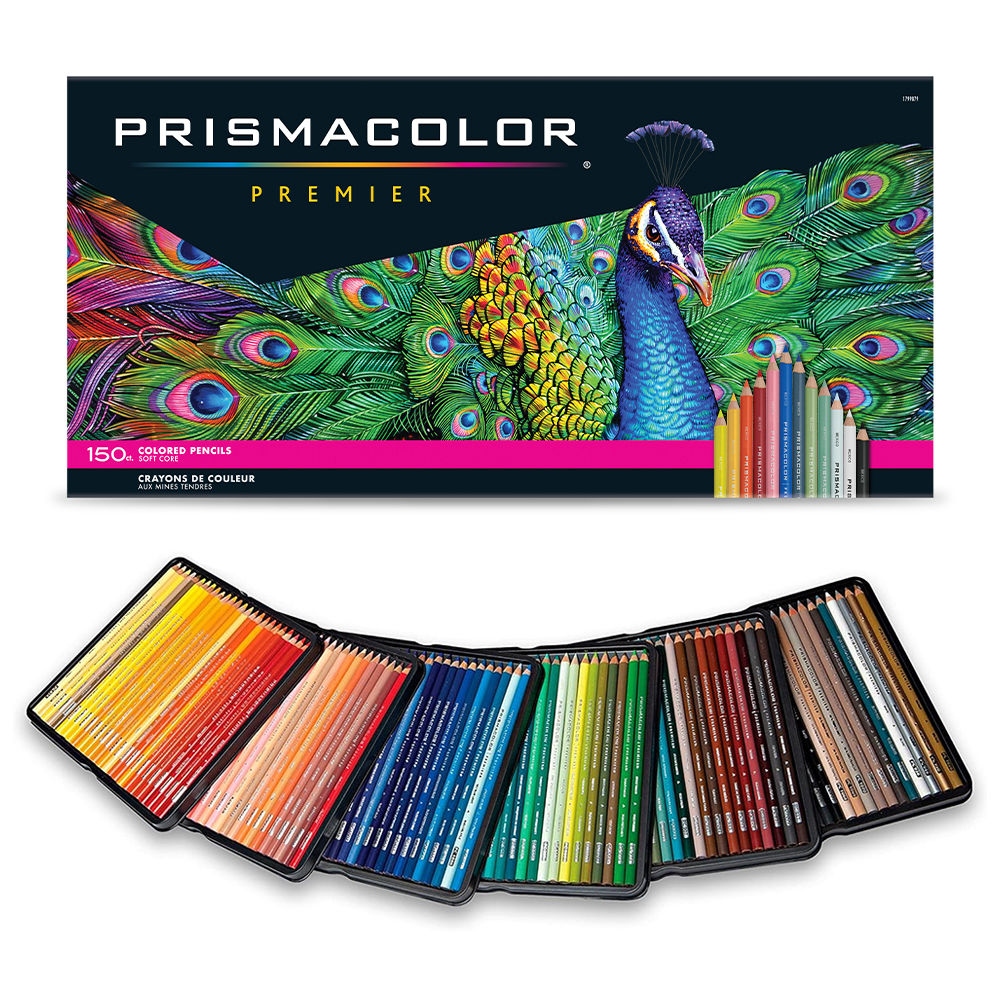
Prismacolor Premier is available in several set sizes. Here is how to choose:
12-Piece Set — For Beginners
The 12-piece covers the primary and secondary colour spectrum with a small selection of neutrals. It is the right entry point for someone who wants to experience the Premier core before committing to a larger set. Limited for serious illustration work but sufficient for journaling, hand lettering accents, and basic colour practice.
24-Piece Set — The Practical Starting Point
The 24-piece is the set we recommend most often for adult beginners who are serious about improving. It covers enough of the colour spectrum to work on portraits, botanicals, and landscapes without constant colour mixing limitations. A meaningful step up from the 12-piece without the investment of the larger sets.
48-Piece Set — The Sweet Spot
The 48-piece is where the range becomes genuinely versatile. The expanded skin tone selection, deeper neutrals, and broader value range within each colour family make this the set most hobbyist and intermediate artists will find they never outgrow. This is the set we carry and recommend at The Hadler Store.
72, 132 and 150-Piece Sets — For Serious Artists
The 72, 132 and 150-piece sets are for artists who work extensively in coloured pencil and need precise colour matching across a wide spectrum. At this level the investment is significant — and artists working at this level will likely already know whether they need it.
Who Prismacolor Premier Is Best For
Prismacolor Premier is the right pencil for:
- Adult beginners and hobbyists who want professional-quality results without a professional price tag. The soft core makes colour application forgiving — it rewards rather than punishes technique.
- Illustrators and sketchbook artists who prioritise vibrancy and blendability over archival permanence. For work that will be scanned or shared digitally, Premier is hard to beat at this price.
- Artists transitioning from markers who want the control of a pencil with colour saturation closer to alcohol markers than traditional coloured pencils.
- Portrait and botanical artists who need a wide, blendable colour range and work primarily in layered gradients.
Prismacolor Premier is less suited for:
- Artists who require archival permanence for sold or commissioned work — consider Faber-Castell Polychromos or Derwent Lightfast instead.
- Artists who prefer highly detailed, fine-line work — the soft core breaks under pressure and sharpening frequently interrupts detailed sessions.
- Young children — the soft core is fragile and the set sizes are priced for adult use.
Frequently Asked Questions
Are Prismacolor Premier pencils good for beginners?
Yes — they are one of the best entry points into quality coloured pencils for adults. The soft core is forgiving, the colours are vibrant, and the blending behaviour teaches layering technique naturally. The 24 or 48-piece set is the right starting point.
How do Prismacolor Premier compare to Copic markers?
Different tools for different applications. Copic markers produce flat, even colour quickly — ideal for illustration and design work. Prismacolor Premier produces textured, layered colour with more depth and control — ideal for fine art, portraiture, and botanical work. Many artists use both.
Do Prismacolor pencils work with blending stumps?
Yes. The soft wax core responds very well to blending stumps and colourless blender pencils. For a more dramatic blend, mineral spirits or Gamsol applied with a brush dissolve the wax binder and produce a smooth, paint-like result.
What paper works best with Prismacolor Premier?
A smooth to medium tooth paper gives the best results. Strathmore 400 Series Bristol Smooth, Canson Mix Media, and Fabriano Artistico hot press are all strong choices. Heavy tooth paper can fragment the soft core and produce a grainy result.
Are Prismacolor pencils lightfast?
Partially. Some colours in the range have strong lightfastness ratings — others, particularly certain reds and purples, are rated poor. For work that will be displayed long-term, check the lightfastness rating of individual colours on Prismacolor's website.
Our Verdict
Prismacolor Premier is worth it — with one condition: you need to be buying them for the right reasons.
If you want soft, blendable, vibrantly pigmented pencils for sketchbook work, hobbyist illustration, portraiture, or botanical drawing — and archival permanence is not your primary concern — Premier is the best pencil at this price point. Wirecutter's 2026 recommendation as the best coloured pencil for adults is well earned.
If you need archival permanence or extreme tip durability for professional commissioned work, the conversation shifts toward Faber-Castell Polychromos or Derwent Lightfast. But for most adult artists discovering or deepening a coloured pencil practice — Premier is the answer.
Shop Prismacolor Premier at The Hadler Store
We carry Prismacolor Premier in multiple set sizes. Authorised retailer, worldwide shipping from Singapore. Free delivery on orders over $280.