
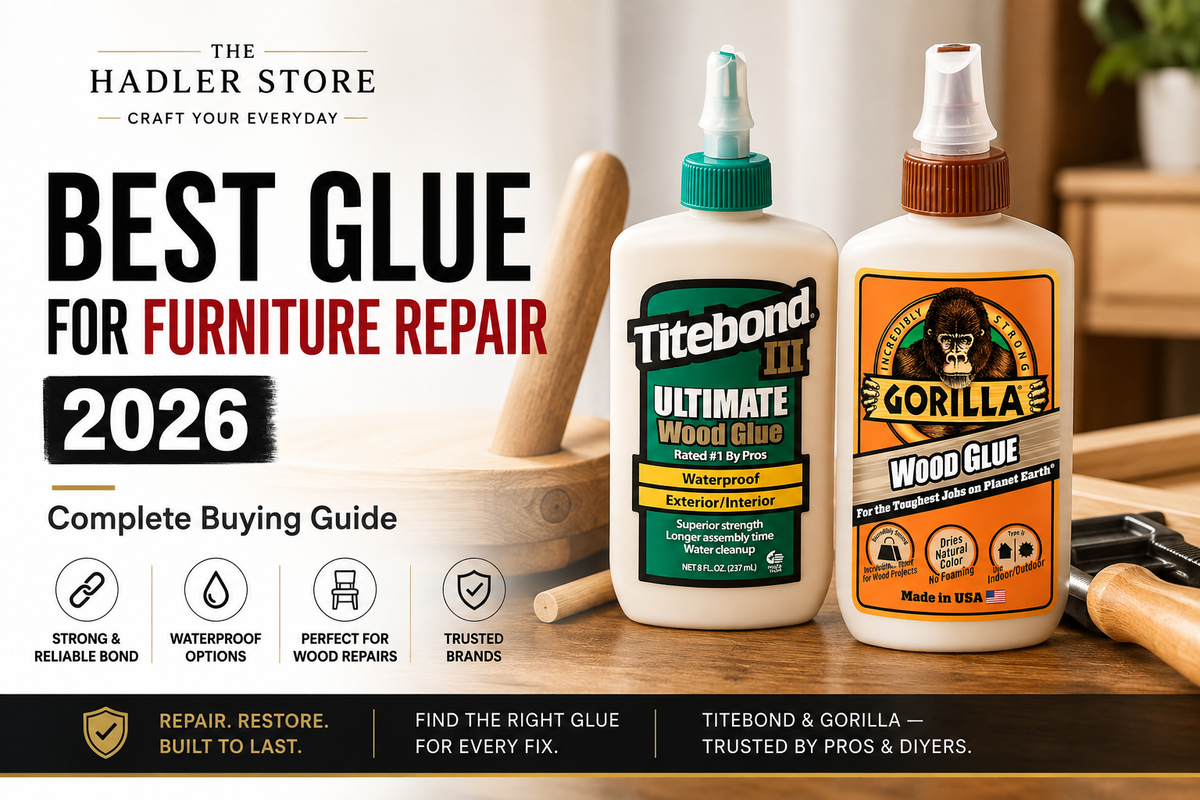
The Best Glue for Furniture Repair in 2026 — A Complete Buying Guide
A dining chair that creaks every time someone leans back. A wardrobe door hinge pulling away from softened wood. A tabletop with a hairline crack that seems to widen every humid season. If you have lived through a hot, damp climate, a long-haul move, or just years of daily use, you already know: furniture does not fail all at once. It loosens quietly, joint by joint, until one day it gives way entirely.

Most of these fixes do not need a carpenter or a new piece of furniture. They need the right glue, used the right way. Here is how to pick one that actually works.
Why Do Wooden Joints Loosen in the First Place
Wood is not a static material — it expands and contracts with heat and humidity, which is exactly why furniture joints in tropical and humid climates loosen faster than in dry, temperate ones. Every time wood swells and shrinks, the old glue bond flexes microscopically until it eventually cracks. Add years of weight, movement, and the forces of daily use, and even well-built furniture starts to wobble.
Understanding this is the first step to choosing the right repair. You are not just sticking two pieces of wood together — you are rebuilding a joint that needs to keep surviving ongoing movement and moisture variation.
Quick Reference — Which Glue for Which Job
| Repair Type | Best Adhesive | Why |
|---|---|---|
| Clean, tight wood-to-wood joint | Titebond Wood Glue | Stronger than wood when cured, easy cleanup |
| Gap-filling, uneven surfaces, mixed materials | Gorilla Glue | Expands to fill gaps, moisture-resistant once cured |
| Prep and surface cleaning before any repair | Goo Gone | Removes old adhesive and residue without damaging wood |
For Tight, Clean Wood Joints — Titebond Wood Glue
If the joint still fits together snugly — chair rungs, table legs, drawer frames — a PVA wood glue is the right first choice. Titebond Wood Glue is the standard here for good reason: it forms a bond that is actually stronger than the wood itself once fully cured, it wipes clean with a damp cloth before drying, and it handles the vast majority of household furniture repairs reliably.

Apply a thin, even coat to both surfaces, clamp the joint firmly, and leave it for the full cure time stated on the label rather than rushing it. Most people pull the clamp too early — the bond forms quickly but full strength takes longer. A minimum of one hour clamped, and 24 hours before putting the joint under any load, is the right approach.
Titebond is also the cleanest adhesive to work with of the options here — excess squeezes out visibly at the joint line and wipes away with a damp cloth before it cures. No mess, no residue, and the dried glue sands and accepts stain or paint cleanly.
Shop Titebond Wood Glue at The Hadler Store →
For Gaps, Uneven Surfaces, or Mixed Materials — Gorilla Glue
Not every repair is a clean, tight fit. If a joint has shrunk slightly, a piece has warped, or you are bonding wood to metal or plastic hardware, a polyurethane adhesive like Gorilla Glue is the better option. It expands slightly as it cures — typically 3–4 times its applied volume — which helps it grip uneven or slightly separated surfaces that a thin wood glue would simply slide out of.

Gorilla Glue also holds up well against moisture once fully cured, making it a reliable choice for furniture in humid environments or items that live outdoors or in high-moisture rooms like bathrooms or laundry areas.
A few things worth knowing before you reach for it:
- Dampen one surface lightly before applying. Polyurethane glue needs moisture to activate. A barely damp cloth on one side of the joint is sufficient.
- Clamp firmly. The expansion during curing can push joints apart slightly if not clamped. Hold firmly for at least two hours.
- Use sparingly. Because it expands, a small amount goes further than expected. Over-application causes excessive foam squeeze-out that requires trimming once cured.
- The cured foam sands and paints cleanly once fully set — any squeeze-out can be trimmed with a sharp knife and sanded smooth.
Shop Gorilla Glue at The Hadler Store →
Before Any Repair — Surface Prep with Goo Gone
A repair only bonds well if the surface underneath is properly clean. Old, cracked glue, residue from a previous repair attempt, sticker residue from packaging, or leftover tape marks all prevent a new adhesive from making proper contact with the wood beneath them.

This is where Goo Gone handles the quiet, unglamorous work that makes everything else possible. The citrus-based formula softens old adhesive and residue so it can be wiped away without gouging or sanding the wood surface. Five minutes of prep with Goo Gone before applying fresh adhesive is the difference between a repair that holds for years and one that fails within months.
Shop Goo Gone at The Hadler Store →
How Long Does Wood Glue Take to Dry
Drying time and curing time are different things, and the difference matters for furniture repair:
| Adhesive | Clamp Time | Light Use | Full Cure |
|---|---|---|---|
| Titebond Wood Glue | 30–60 minutes | After 1 hour | 24 hours |
| Gorilla Glue | 1–2 hours | After 2 hours | 24 hours |
In a humid tropical climate, both adhesives benefit from slightly longer cure times — humidity slows solvent evaporation and the chemical curing process. If in doubt, leave clamped overnight rather than at the minimum stated time.
Do You Always Need to Clamp
For wood glue — yes, almost always. Clamping serves two purposes: it holds the joint in the correct position while the adhesive sets, and it removes any air gaps between the surfaces that would weaken the bond. Even light pressure from a rubber band wrapped around a chair rung, or heavy books stacked on a flat joint, is better than no clamping at all.
.webp)
For Gorilla Glue specifically, clamping is more important than with standard wood glue because the expansion during curing can push joints slightly apart without the mechanical constraint of a clamp.
The one exception is very small gaps and cracks on flat surfaces where the weight of the piece itself provides sufficient pressure while the adhesive sets.
Which Glue Should You Actually Buy
As a practical rule: use Titebond for clean, tight wood-to-wood joints — it is the most reliable choice for the majority of household furniture wear and wobble. Reach for Gorilla Glue when there are gaps, mismatched materials, or the joint is in a damp environment. Keep Goo Gone on hand for prep on every one of these jobs.
Most households only need these two adhesives and the surface prep solution to handle the full range of furniture wear and tear. None of them require special tools beyond a clamp or two, none are expensive, and all of them sit quietly in a drawer until the exact moment you need them — which, if you own furniture long enough, is a matter of when rather than if.
Frequently Asked Questions
Is Gorilla Glue or Titebond stronger for wood?
For clean, tight wood-to-wood joints, Titebond produces a stronger bond — it penetrates wood fibres and cures to a bond that exceeds the tensile strength of the wood itself. Gorilla Glue is stronger in gap-filling applications and on mixed materials where Titebond's thin consistency would not bridge the gap. For most furniture joints, Titebond is the right first choice.
Can you glue furniture without clamping?
Technically yes, but the bond will be weaker. Clamping removes air gaps between surfaces and holds the joint in correct alignment while the adhesive sets. Even improvised clamping — rubber bands, heavy books, weights — produces a meaningfully stronger result than simply pressing surfaces together by hand and leaving them.
How do you reglue a wobbly chair leg?
Remove the loose leg completely if possible. Use Goo Gone to clean any old dried glue from both surfaces. Apply Titebond Wood Glue evenly to both mating surfaces. Reassemble, clamp firmly, and leave for a minimum of one hour before removing the clamp and 24 hours before putting the chair back into use.
Does Gorilla Glue work on all types of wood?
Yes — Gorilla Glue works on hardwood, softwood, and engineered wood including MDF and plywood. It is also effective on wood-to-metal and wood-to-plastic bonds, making it the more versatile option when the materials are mixed or the surfaces are not perfectly matched.
Can you paint over dried wood glue?
Yes for both Titebond and Gorilla Glue once fully cured. Sand the joint smooth first — both adhesives sand cleanly. Titebond dries to a slightly tan colour; Gorilla Glue cures to a light beige foam. Both accept primer and paint without issue once sanded flat.
Where can I buy Gorilla Glue and Titebond in Singapore?
We carry both Gorilla Glue and Titebond Wood Glue at The Hadler Store — worldwide shipping from Singapore.
Shop Adhesives and Home Repair at The Hadler Store
We carry Gorilla Glue, Titebond Wood Glue, and Goo Gone alongside a curated range of home repair and DIY essentials. Authorised retailer, worldwide shipping from Singapore.
Shop Adhesives and DIY Essentials at The Hadler Store →
Also read: How to Remove Sticky Residue from Any Surface · How to Clean a Glass Cooktop Without Scratching It